Showing posts with label Jam. Show all posts

Saturday, August 2, 2014

Jam made with Turkish Figs

I have been interested in figs for years (see previous post on fig jam from Lebanese figs), in their botany, in their geographic range --I see them everywhere, and in the diversity of the fruit. I was in southwestern Turkey at the end of July and discovered that Turkey is definitely a good place to go when it comes to figs.


These green figs were available everywhere: sold in stands along the highways, in the local village market, and hanging from the trees in gardens and fields.

I decided to make a small batch of jam from them and bought a kilo at the market.


This was my jam-cooking process.

Notes on the measurements

Description of fruit:

Medium large with green skin, pale red interior, not too many seeds for jam making.

I am a lazy cook, I like to call my food preparation 'rustic' but that really means that I don't like to take the time to work on refining the process for presentation. I'm more interested in the idea and the taste of the food. The results of my work would never win a ribbon in the county fair.

I made the jam from unpeeled figs. I DID cut off the thick stem end and removed the flower opening but beyond that, I just chopped the fruit into medium sized pieces.


I combined the fruit, sugar, lemon juice and lemon zest in the pan. After smelling and tasting, it seemed a little too lemony so I added a bit of sweet aniseed to counter it.

This mixture was brought to a boil and cooked for 20 minutes or so, long enough to kill organisms and stop enzyme activity, and make the jam thicken.

My current apartment isn't equipped with the usual canning tools so I improvised.

I re-used jars and sterilized them in the oven. If I had them, I would use canning jars, but they are not available here. The jars were laid on sides in oven to heat.

I set the oven temperature as low as possible to prevent the jars from breaking. 

These were some of the tools used for my kitchen jam project:

  • Small pan for sterilizing jar tops
  • Tongs for handling hot jars and jar tops
  • Ladle and funnel to facilitate jar filling
  • And clean cloth to wipe the rim of the jars.


The hot jam was ladled into hot jars, the jar rims wiped clean and jars closed.

This micro-batch made three and a half small jars.

Fig jam on fresh bread?

Fig jam and dark chocolate chunks on yoghurt?

Any other ideas? 

Wednesday, November 28, 2012

Micro-batching Fig Jam

I really like figs, I like them so much that I've planted two fig trees in my back garden in Olympia, Washington. The climate there is marginal when it comes to ripening the fruit and I am lucky to get two or three figs from the oldest tree before the neighborhood raccoons get the handful of others that might have ripened. I won the second fig tree at a Fruit Society Meeting two years ago, and it had not borne fruit before I left home for the UAE. This second one is a clone of one that seems to be well-adapted to one of the San Juan Islands (Washington State, USA) so I have high hopes that it will be a good one in relatively nearby Olympia as well.

The edible fig, Ficus carica L., originated in the Middle East. This is significant because the plant has a relationship with a tiny native wasp which crawls into the floral structure, crawls around pollinating the flowers, and thus, producing seedy fruit. The wasp is not found in the Pacific Northwest so the figs that we are able to produce in the my region in the U.S. are seedless, like seedless grapes. Until I moved here, I had not had a fresh fig with seeds, which brings me to my story, sort of. The seeds were a pleasant surprise since it started me thinking about wild fig plants.

Fig jam with za'atar and date jam with lemon
at Sands Restaurant, BanyanTree Al Wadi 
Recently I ate in a restaurant in Ras Al Khaimah (UAE) where I was served two home-made jams, a fig jam flavored with wild za'atar and a date jam with lemon peel. They were both delicious but I was especially interested in hearing about the fig with za'atar. Za'atar is the local name for either oregano, marjoram or thyme. Most people will say that it is thyme but it doesn't look like the thyme I'm familiar with, and it smells more like marjoram or oregano. But since these culinary herbs are indigenous to the Middle East, there will be a lot of variation in both plant type and flavor in this region. I decided that I wanted to make my own fig jam flavored with wild za'atar. I have made micro-batches of fresh fig jam in the past and like experimenting with different combinations of citrus peels and aromatic seeds so this project was not totally new to me. I have also made enough jam in tiny batches to know how to do it. But I do have some challenges living here: no canning jars or equipment.

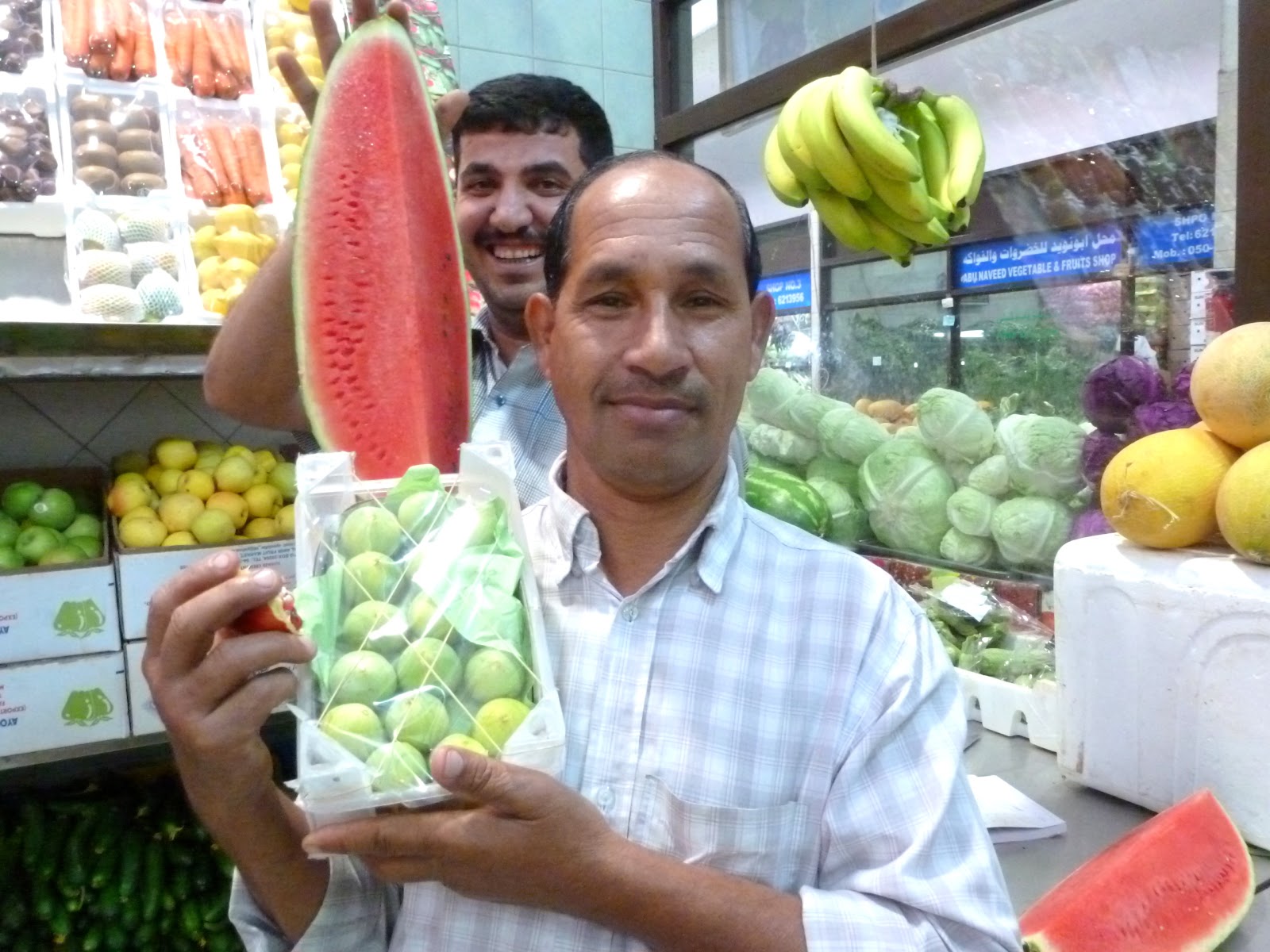
My souq friends clowning around with watermelon and figs
I found small yellow figs imported from Lebanon at my neighborhood vegetable souq. I wasn't going to buy them, thought the little yellow fruits would be an under-ripe, flavorless waste, but my friends at the souq convinced me to try them. I took home a box of about two kilos of fruit and was happy to discover that they were delicious, sweet and jammy. It turns out that these are the type of fig that the wasp visits. Whether the presence of seeds affected the flavor or whether they were just a good variety at the peak of ripeness, they were exquisite. I ate one and left the rest for making the jam.

I was unable to find the za'atar soon enough for the making of the jam so fig and za'atar jam will have to wait until I can find both at the same time. I have to admit that the chef said they used the dried herb instead of fresh.

This batch is Aniseed-Lemon Peel-Fig Jam wonderful.

Micro-batch Fig Jam Recipe Using Small, Yellow, Seedy, Lebanese Figs


2 kilos(?) of figs (see the box of figs in photo above)
2 cups of sugar
1 tsp aniseed, slightly crushed to release flavor
peel of 1 lemon cut into slivers

Before making the jam, prepare the jars and utensils. I used clean but used jam jars. I have no real canning jars so I used thick glass jars I had saved for storing foods bought in bulk. I would recommend using canning jars if at all possible so that the jars can be properly sealed and are less likely to break from heating them. Place the clean jars on their sides (no tops) in the oven and turn the oven on to a low temperature. This is to sterilize the jars, you don't want to break them so try for about 180-200 degrees F. (not Celsius!).

Boil the jar tops in a small saucepan to kill any potential jam-spoiling organisms. I also sterilize the utensils in the same saucepan. I use a stainless steel stirring spoon, ladle, tongs and a canning funnel (here I used the top of a 5 liter plastic water bottle as my funnel).

Wash, then chop the fruit into pieces. Put in large pan with the rest of the ingredients and bring to a boil, stirring so that it doesn't burn on the bottom. Cook it down to a good jam consistency. When ready, ladle the hot jam into the hot jars. Use the funnel to keep the opening and outside of the jar jam-free. Use a napkin dipped in the boiling water to wipe off the rim of the jar before putting the top on.

Back to that seediness I mentioned... I was surprised to see many tiny yellow seeds floating around in the jam mixture as it cooked. Yes, these figs were seedy! I skimmed off some of them but after tasting the skimmings, realized that they did not add a bad flavor to the jam so I left the rest. It depends on your taste and digestive system whether to skim off some or just leave them as an added texture.

Finished jam
After the jam has cooled to room temperature, store in refrigerator or freezer. I made almost 3 jars of jam from the figs I bought. I brought the partially full jar into work for tasting, am still working on one jar and put the last jar in the freezer. So far, it hasn't spoiled.

About a month after making my jam, I read a post at Sugar Street Review about Bethany Kehdy from Dirty Kitchen Secrets, She conducts food trekking tours in Lebanon and is having a contest to win a food tour of Lebanon in 2013. It's more than perfect for me, don't you think? She even has a photo of women working with wild za'atar on her website.

I have visited Lebanon once so far and loved it. That first trip was a literary holiday, spending time with publishers, meeting an author at a street bookfair, and in book stores buying the literature of Lebanon. As I was leaving, I promised myself and new friends that I would return for the olive and grape harvests. I missed the harvest this year but I still intend to return. As I write this, I realize how much I want to delve into the wild origins of the food plants of this region. I don't want to return to my home country until I've finished this project.